



Hey there! As a supplier of Slow Turning Diesel Generators, I've been getting a lot of questions lately about how the slow turning speed affects the generator's self - excitation ability. So, I thought I'd sit down and write this blog to share my insights on the topic.
Let's start with the basics. Self - excitation is a crucial process in a generator. It's how the generator creates its own magnetic field, which is essential for producing electricity. When the generator starts up, the residual magnetism in the rotor induces a small voltage in the stator windings. This small voltage then causes a current to flow through the field windings, which in turn strengthens the magnetic field. This process keeps repeating until the generator reaches its rated voltage.
Now, when it comes to slow turning speed, things get a bit tricky. The speed at which the generator's rotor turns is directly related to the frequency of the electricity it produces. In most cases, generators are designed to run at a specific speed to produce the standard frequency, like 50Hz or 60Hz. When the turning speed is slow, it can have a significant impact on the self - excitation ability.
One of the main issues with slow turning speed is that it reduces the rate of change of magnetic flux. According to Faraday's law of electromagnetic induction, the induced voltage in a coil is proportional to the rate of change of magnetic flux through the coil. So, when the rotor turns slowly, the magnetic flux through the stator windings changes more slowly, which means the induced voltage is lower. This lower induced voltage can make it difficult for the self - excitation process to get started.

For example, if the residual magnetism in the rotor is weak to begin with, and the turning speed is slow, the initial voltage induced in the stator windings might be too low to create a sufficient current in the field windings. As a result, the magnetic field won't strengthen as it should, and the generator may not be able to reach its rated voltage.
Another problem is that slow turning speed can also affect the stability of the self - excitation process. Once the self - excitation starts, the generator needs to maintain a stable magnetic field to keep producing electricity at a consistent voltage. But when the speed is slow, small fluctuations in the load or other factors can have a more significant impact on the magnetic field. This can lead to voltage instability, which is a big no - no in most applications.
However, it's not all bad news. There are some ways to mitigate the effects of slow turning speed on self - excitation. One approach is to use a more powerful residual magnet in the rotor. A stronger residual magnet can induce a higher initial voltage in the stator windings, even at a slow turning speed. This gives the self - excitation process a better chance of getting started.
Another option is to use an external excitation system. This system provides an initial boost of current to the field windings, helping to establish the magnetic field more quickly. Once the magnetic field is strong enough, the generator can then switch to self - excitation mode.
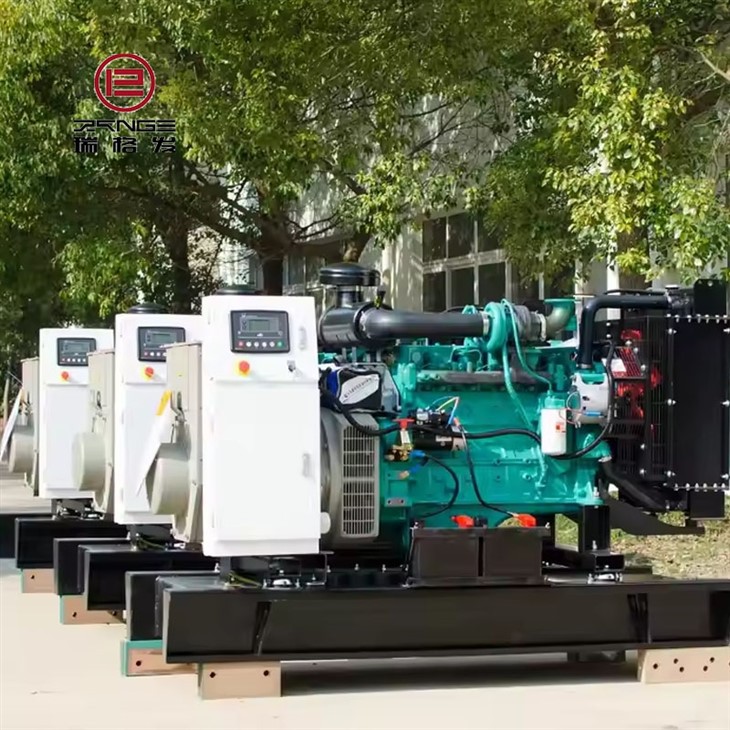
At our company, we've been working hard to develop Slow Turning Diesel Generators that can overcome these challenges. Our generators are designed with advanced technology to ensure reliable self - excitation even at slow turning speeds. We understand that different customers have different needs, and that's why we offer a wide range of generators, including the 4kva Silent Generator, the 3.5kva Silent Generator, and the 625kva Generator.
These generators are built with high - quality components and innovative design features to optimize the self - excitation process. For instance, we use high - grade magnets in the rotors to ensure a strong residual magnetism. We also incorporate intelligent control systems that can adjust the excitation current based on the turning speed and load conditions.
In addition, our generators are thoroughly tested before they leave the factory. We simulate different operating conditions, including slow turning speeds, to make sure they can perform reliably in the real world. This way, our customers can have peace of mind knowing that they're getting a generator that can handle the challenges of slow turning speed.
If you're in the market for a Slow Turning Diesel Generator, it's important to consider the self - excitation ability. A generator that can't self - excite properly at slow speeds may lead to frequent breakdowns and poor performance. That's where our generators come in. We've got the experience and the technology to provide you with a reliable solution.
Whether you need a small generator for a home backup or a large one for an industrial application, we've got you covered. Our team of experts is always ready to help you choose the right generator for your needs. We can also provide you with technical support and maintenance services to keep your generator running smoothly.
So, if you're interested in learning more about our Slow Turning Diesel Generators or have any questions about the self - excitation ability, don't hesitate to get in touch. We're looking forward to having a chat with you and discussing how we can meet your power generation needs.
References
- "Electrical Machinery Fundamentals" by Stephen J. Chapman
- "Power System Analysis and Design" by J. Duncan Glover, Mulukutla S. Sarma, and Thomas J. Overbye


