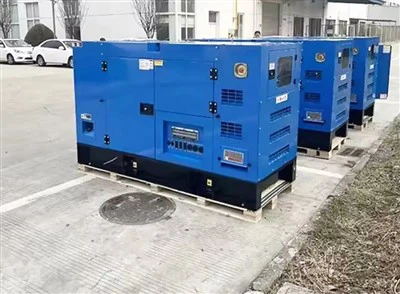

The diesel generator set emits smoke when it malfunctions, and based on the different colors of the smoke, it can be inferred that it may have different faults. Today, we will introduce the treatment methods for diesel generator sets emitting black smoke, blue smoke, and white smoke.
If the diesel generator unit emits black smoke, the reason is usually due to insufficient combustion of diesel, resulting in the emission of carbon black. The main causes of its malfunction include: wear of piston rings, cylinder liners, poor operation of fuel injectors, changes in combustion chamber shape, incorrect adjustment of fuel supply advance angle, and excessive fuel supply. In addition, heavy workloads, poor fuel quality, and low operating temperatures can also lead to black smoke emissions from the exhaust.
If the diesel generator set emits blue smoke, it is often related to the lubricating oil. The lubricating oil enters the cylinder, evaporates into blue oil and gas, and is discharged together with the exhaust gas to produce blue smoke. The usual causes of its malfunction are: clogged air filter, poor intake or high oil level in the oil pan (oil bath air filter), lubricating oil mixed in the fuel, piston ring alignment, burnt cylinder gasket near the oil passage leading to the cylinder head in the body, and worn piston rings, pistons, and cylinder liners.
The white smoke emitted by the diesel generator set is due to the low temperature in the cylinder of the Volvo diesel generator set when it is just started or in a cold state, resulting in the evaporation of oil and gas and the emission of white smoke from the exhaust pipe, which is particularly evident in winter.
But if white smoke still appears in a hot engine state, there will definitely be mechanical failures: cracks in the cylinder liner or damaged cylinder gasket, cooling water entering the cylinder, forming water mist or vapor during exhaust, poor atomization of the fuel injector, oil dripping phenomenon, small fuel supply advance angle, water and air in the fuel, low pressure of the fuel injection pump, or severe wear of the piston, cylinder liner, etc., causing insufficient compression force.